
Peninsula to the lakes
Storm damaged trees on the Central Coast
When an east coast low or a summer storm has been through, the first job is always whatever is still hanging.
Storm damage
In this order
Still hanging
Limbs caught in the canopy come down first, before anyone works underneath them, because they can let go at any time.
Torn or cracked
A split fork or a cracked trunk is made safe next, either by taking weight off it or by taking it down.
On the ground
Then the timber on the lawn, the roof or the fence is cut into lengths and cleared.
How it works
From the first message to a written quote
The council question is settled before any price, and nothing is booked until you have said yes to a quote in writing.
- 1
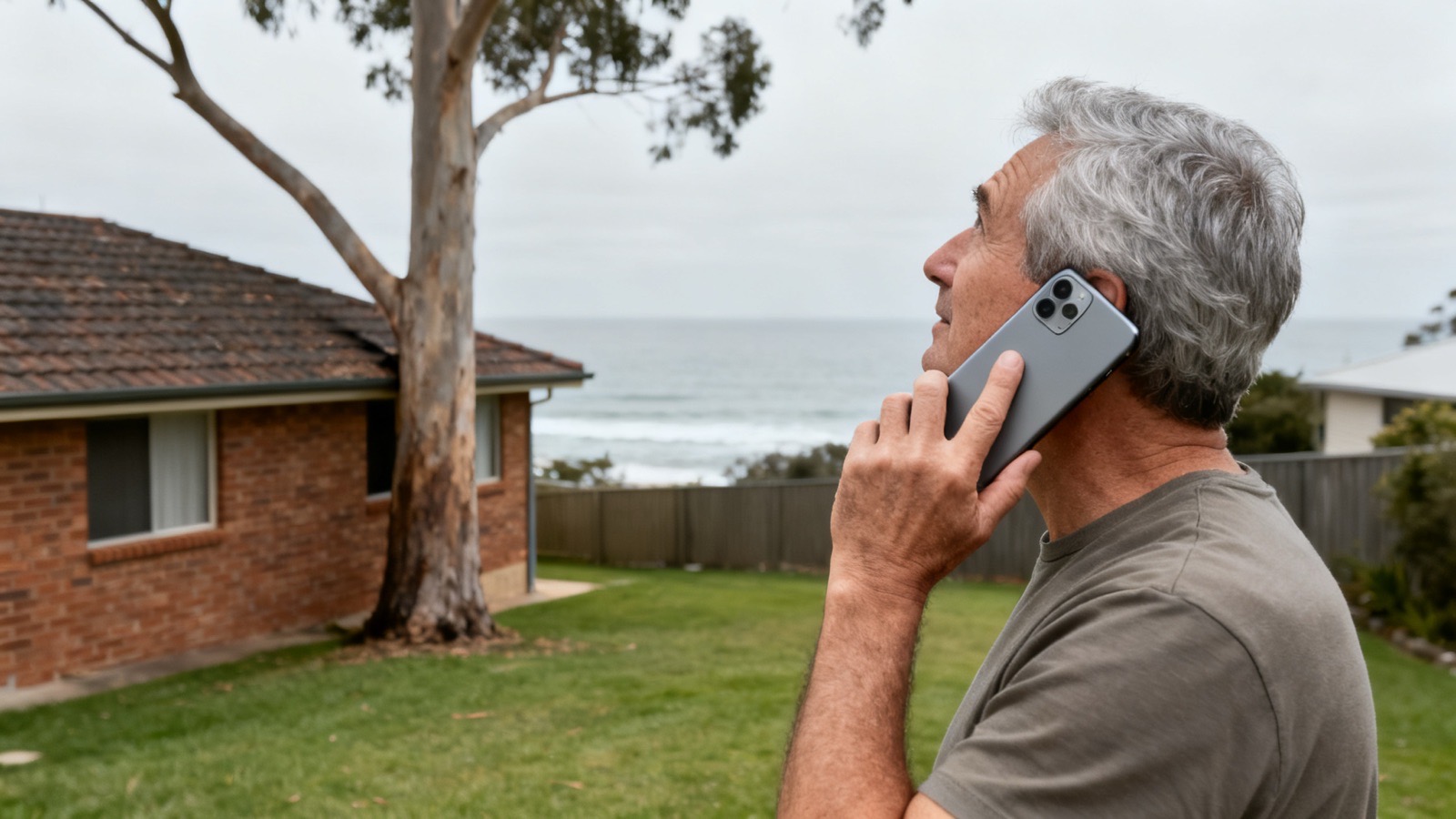
Tell us what the tree is doing
Where it stands, what it is close to and what you would like done about it.
- 2
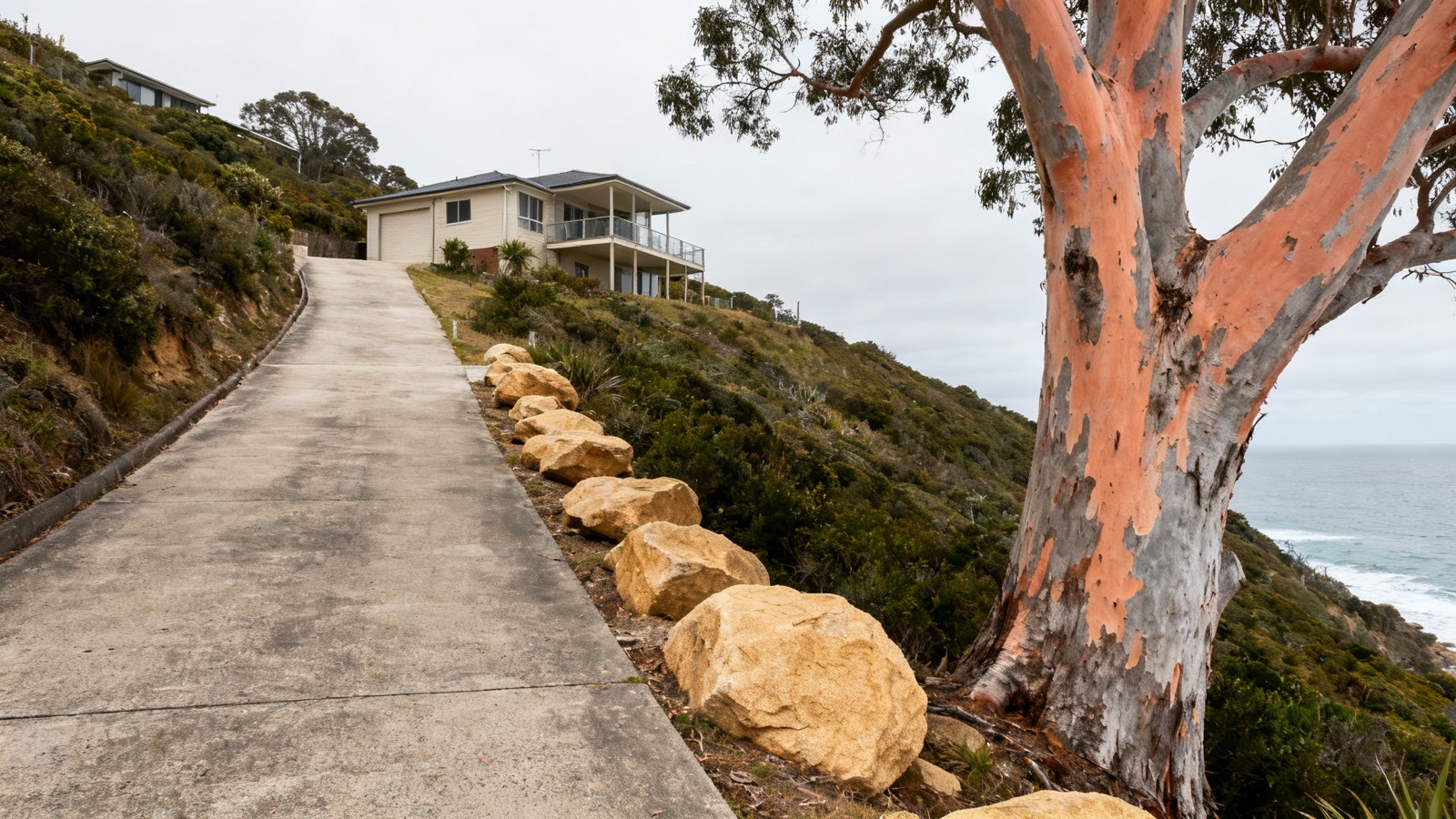
A contractor comes to see it
A tree contractor who covers your suburb looks at the tree, the access and what is underneath it.
- 3
The council question is answered
Height, trunk size, distance from the house and the species decide whether a permit or an exemption applies.

- 4
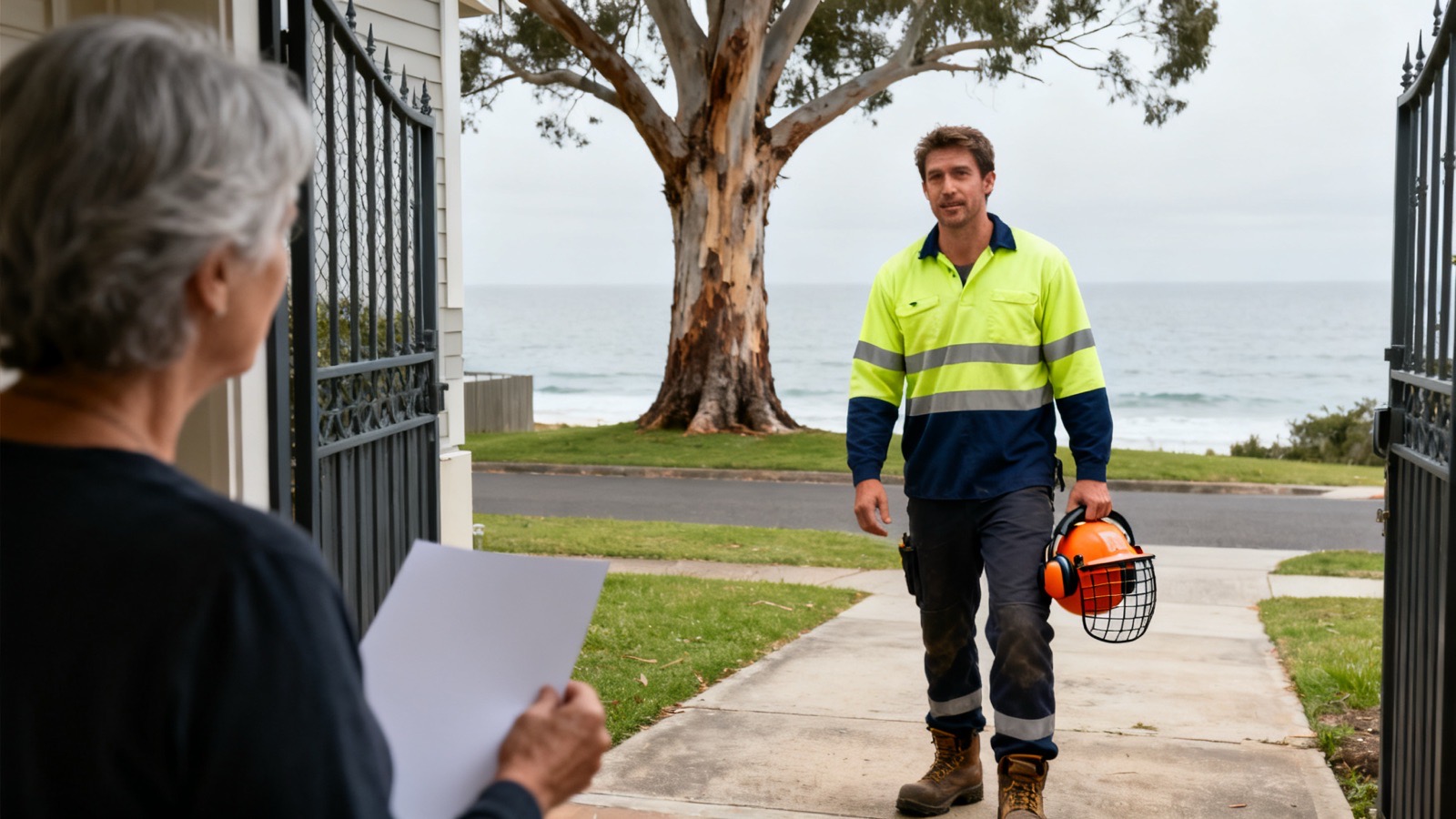
You get it in writing
Scope, timber, stump and date on one page, and nothing is booked until you have said yes.


Storm questions
Photos, insurers and the other trees
Should I take photos for the insurer?
Yes, before anything is moved, as long as it is safe to. Most insurers also want an itemised quote for the tree work.
Does a storm damaged tree need a permit?
The council's risk exemption only covers a tree with imminent, clear and immediate potential to harm after a sudden change in its stability. Where no arborist can be engaged in time, an urgent tree works application can be made.
Are the trees left standing safe?
Not always. A tree that rode out the same wind can carry a cracked fork or a loosened root plate, and both are easier to spot in the days afterwards than months later.
