
Council rules
Tree removal permits on the Central Coast
On the Central Coast council permission may be required to prune or remove trees, so the permit question is answered before anyone quotes the work.
What the rules cover
Pruning counts, not just removal
The state's planning rules define clearing to include the words lop or otherwise remove a substantial part of the vegetation, which is why a heavy prune can need the same permission as taking the tree out. The council then exempts a list of common jobs.
Close to the house
Trees within 3 metres of an existing approved structure are exempt under the council's development control plan, measured from the wall to the nearest part of the trunk, and the council wants an arborist's evidence for the job kept afterwards.
Light pruning
Pruning a maximum of 10% of tree foliage area once every growing season is exempt when it is done to the Australian Standard on small branches. Anything heavier is a permit question.
Branches over the roof
Branches directly overhanging the roofline of an approved structure can be pruned under their own exemption, and the council notes that larger branches can be cut there too.
Undesirable species
Trees on council's Undesirable Species List, among them camphor laurel, cocos palm, Phoenix palm, coral tree and several more, can be removed or pruned under the exemptions, with photographs of the tree kept for the record.
How it works
From the first message to a written quote
The council question is settled before any price, and nothing is booked until you have said yes to a quote in writing.
- 1
Tell us what the tree is doing
Where it stands, what it is close to and what you would like done about it.
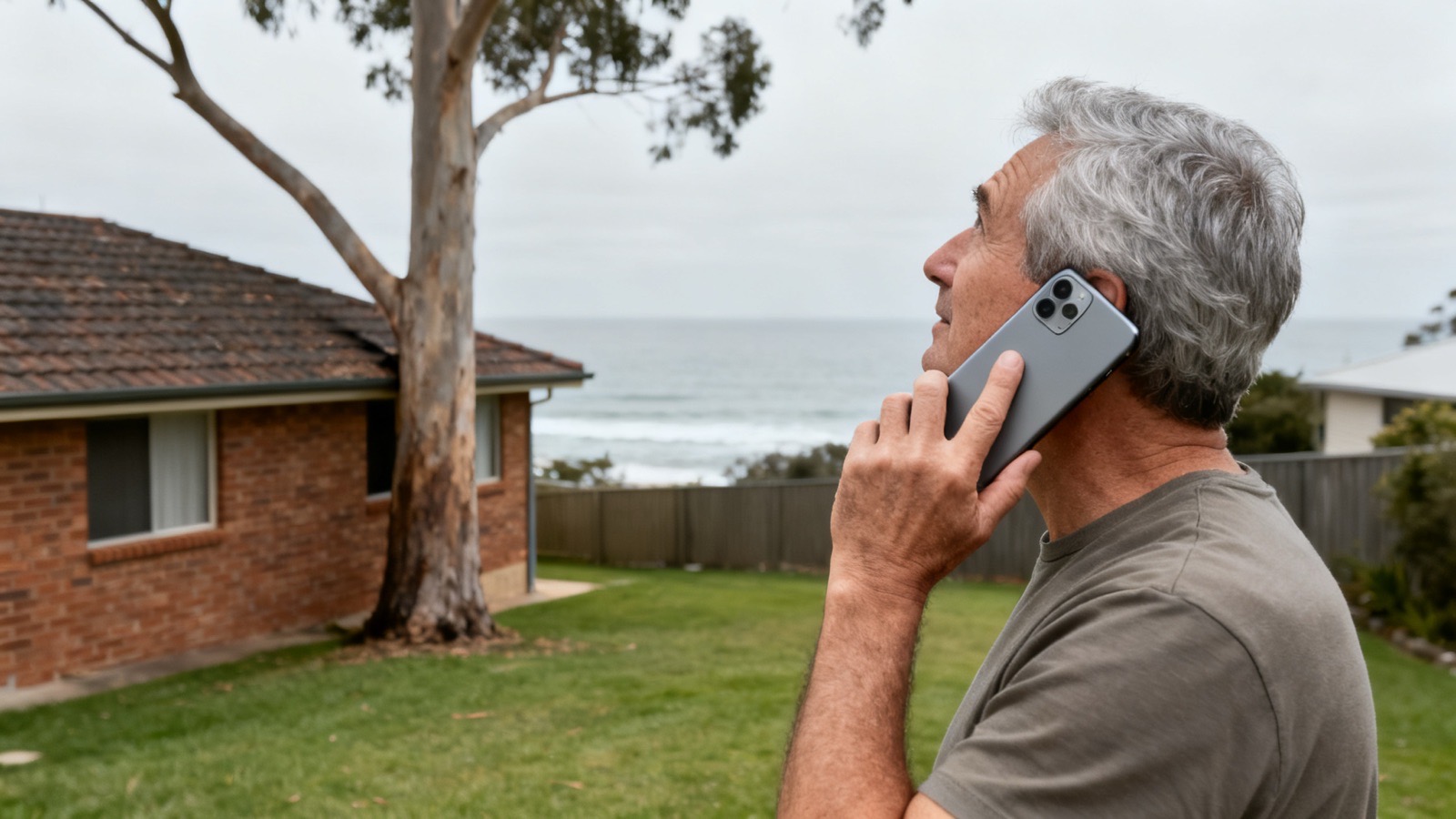
- 2
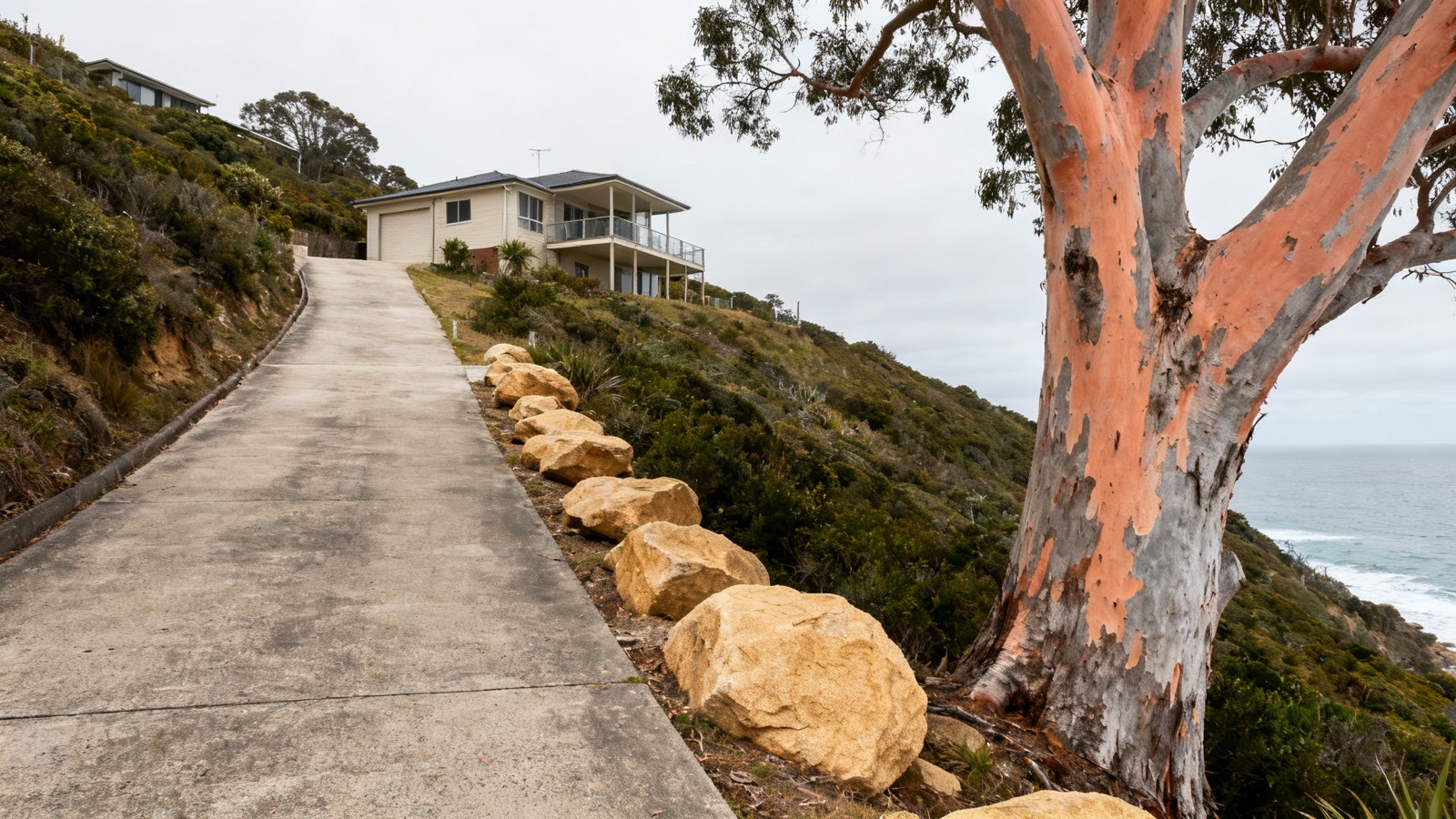
A contractor comes to see it
A tree contractor who covers your suburb looks at the tree, the access and what is underneath it.
- 3
The council question is answered
Height, trunk size, distance from the house and the species decide whether a permit or an exemption applies.

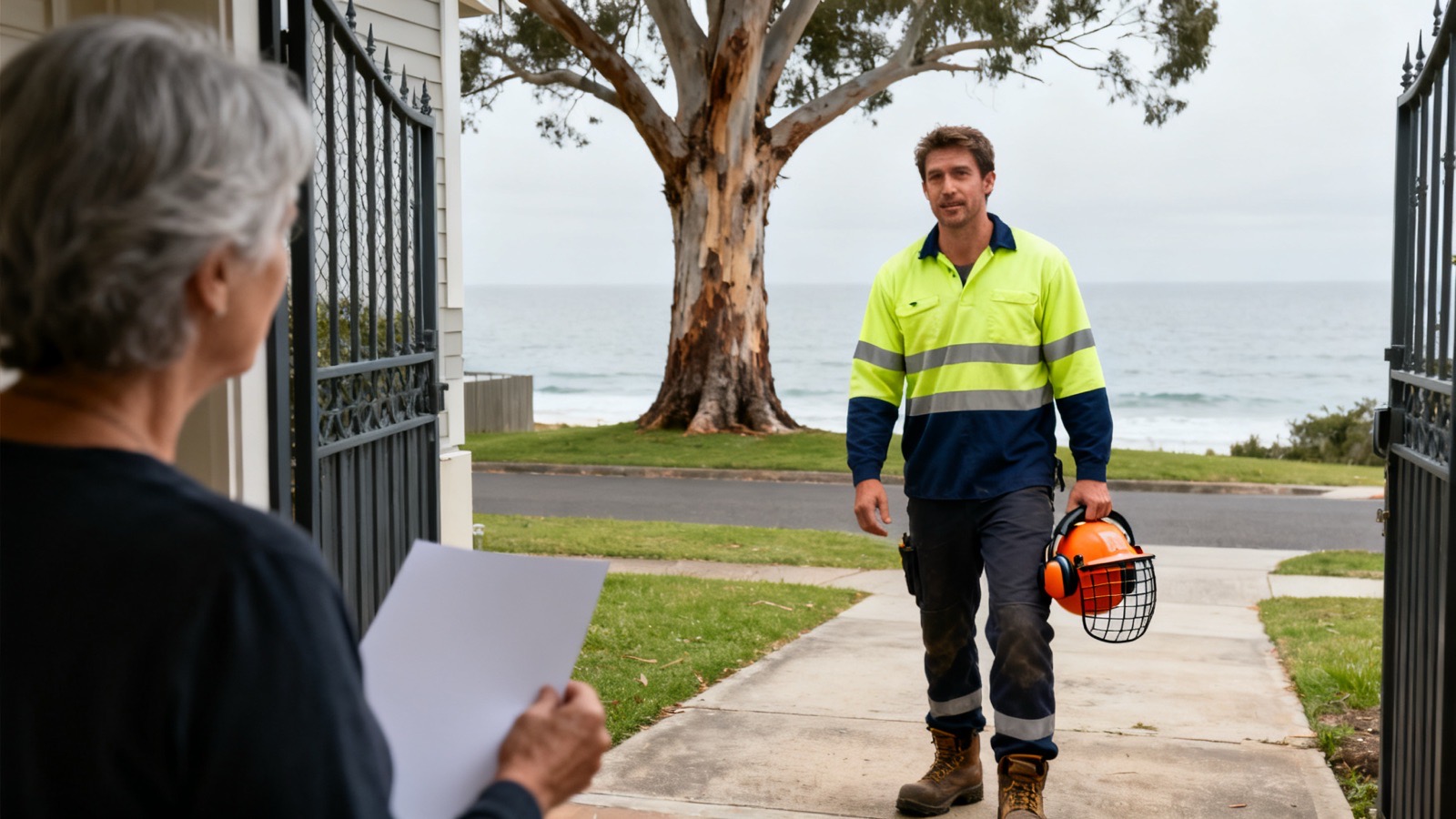
- 4
You get it in writing
Scope, timber, stump and date on one page, and nothing is booked until you have said yes.


Approvals
Dead trees, bushfire rules and the paperwork
Is a dead tree exempt?
Usually, with conditions. The council counts a tree as dead when it has no leaves and has dried out through the trunk, root plate and canopy, and the exemption cannot be used where the tree is habitat, including hollows in trunks or branches. The state has also proposed tightening the dead tree exemption, with final changes proposed for the second half of 2026.
When does none of this apply?
When the tree is a threatened species, a habitat tree for threatened fauna species, part of an endangered ecological community or a heritage item. The council names Melaleuca biconvexa, Syzygium paniculatum and Angophora inopina as threatened trees known in its area, and for those the approval is not a council one.
Does the RFS rule let me clear around the house?
Only on land the RFS online tool shows as a 10/50 entitlement area, checked on the day. There, trees can go within 10 metres of a home, but the code stops at the soil: vegetation must not be removed below the soil surface, so stump grinding is never part of it. It also rules out slopes greater than 18 degrees, and the Kincumber Scribbly Gum Forest.
What reasons does council turn down?
Leaf drop, more natural light, better views, less shade and minor lifting of paths and driveways by roots are not generally accepted on their own, unless a real hazard or safety issue comes with them.
Can another application go in later for a different tree?
Not straight away. Council will not take a new application within 12 months of the last private tree works application for the same property, so it pays to include every tree you are worried about the first time.
What if a storm has left a tree dangerous?
The council's risk exemption only covers a tree with imminent, clear and immediate potential to harm after a sudden change in its stability. Where no arborist can be engaged in time, an urgent tree works application can be made.
